

Community news
Checked updates with a date, a short explanation and a link to the source.
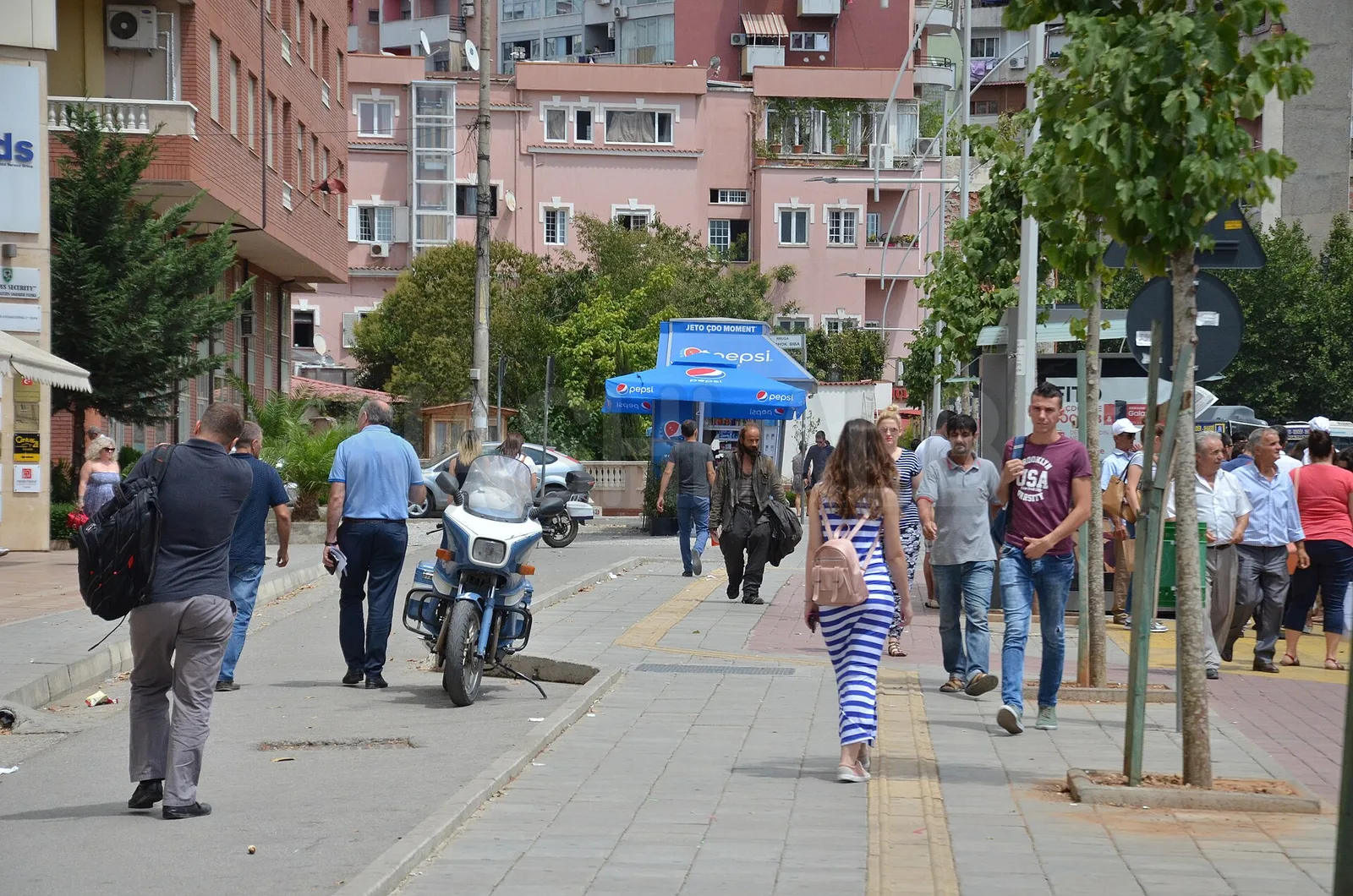
Ukrainian documents in Albania: the apostille is compulsory, and there are only two Ukrainian translators
The first thing to know: the apostille is compulsory. The Albanian foreign ministry publishes a list of countries whose documents are accepted only with an apostille, and Ukraine is number 110 on it. The same page says plainly that documents without an apostille will not be recognised. Separately, the ministry publishes a list of countries exempt from legalisation by reciprocity — Hungary, Czechia, Romania, Russia, Bulgaria, Kosovo. Ukraine is not on that list. So whatever anyone advises you, proceed on the basis that the apostille is needed. The apostille is placed in Ukraine, not at the embassy. The consular section in Tirana does not issue apostilles — that follows directly from the Ukrainian foreign ministry's rules. Which authority depends on the document: diplomas, school certificates, transcripts — the Ministry of Education; birth, marriage, divorce and death certificates, notarial documents, court decisions, archival certificates — the Ministry of Justice; police clearance certificates — the Ministry of Internal Affairs; extracts from the demographic register and migration documents — the State Migration Service; tax documents — the State Tax Service; everything else — the Ministry of Foreign Affairs. It can be done by post, without travelling. The Ministry of Justice procedure expressly provides for applications by post from people abroad, to any civil registry office or to the State Archival Service. More than that: if you do not hold the document at all, you can request its issue and its apostille together. The Ministry of Justice term is up to three working days. The foreign ministry accepts only by post, with no personal reception: up to 10 working days, or up to 5 for the urgent track. People living abroad may pay in foreign currency through correspondent banks. Translation. Albanian law requires an official translation to be made only by a certified official translator on the Ministry of Justice register. The translation must carry the translator's seal and a signed declaration of accuracy — without them the translation is void. And here is the practical news. In the Albanian Ministry of Justice register of October 2026 there are two certified translators of Ukrainian in the whole country, both in Tirana. For comparison, there are sixteen for Russian. Plan the translation early, because two people for everybody is a queue. State tariffs for official translation: a page is 1,800 characters; from a foreign language into Albanian, 1,300 lekë a page excluding VAT; from Albanian into a foreign language, 1,600 lekë. What legalisation costs in Albania. For Albanian citizens, 200 lekë per document. For foreigners the tariff is set by country, and for Ukraine it is 35 euro per document. What we do not assert. Whether a particular office demands a notarised translation on top of a certified one depends on the office; the law lays down no such general requirement. And: Ukrainian registers list a 1958 legal assistance treaty that could in theory remove legalisation, but we could not verify its text, and Albania does not place Ukraine among the exempt countries in its own published lists.
Read →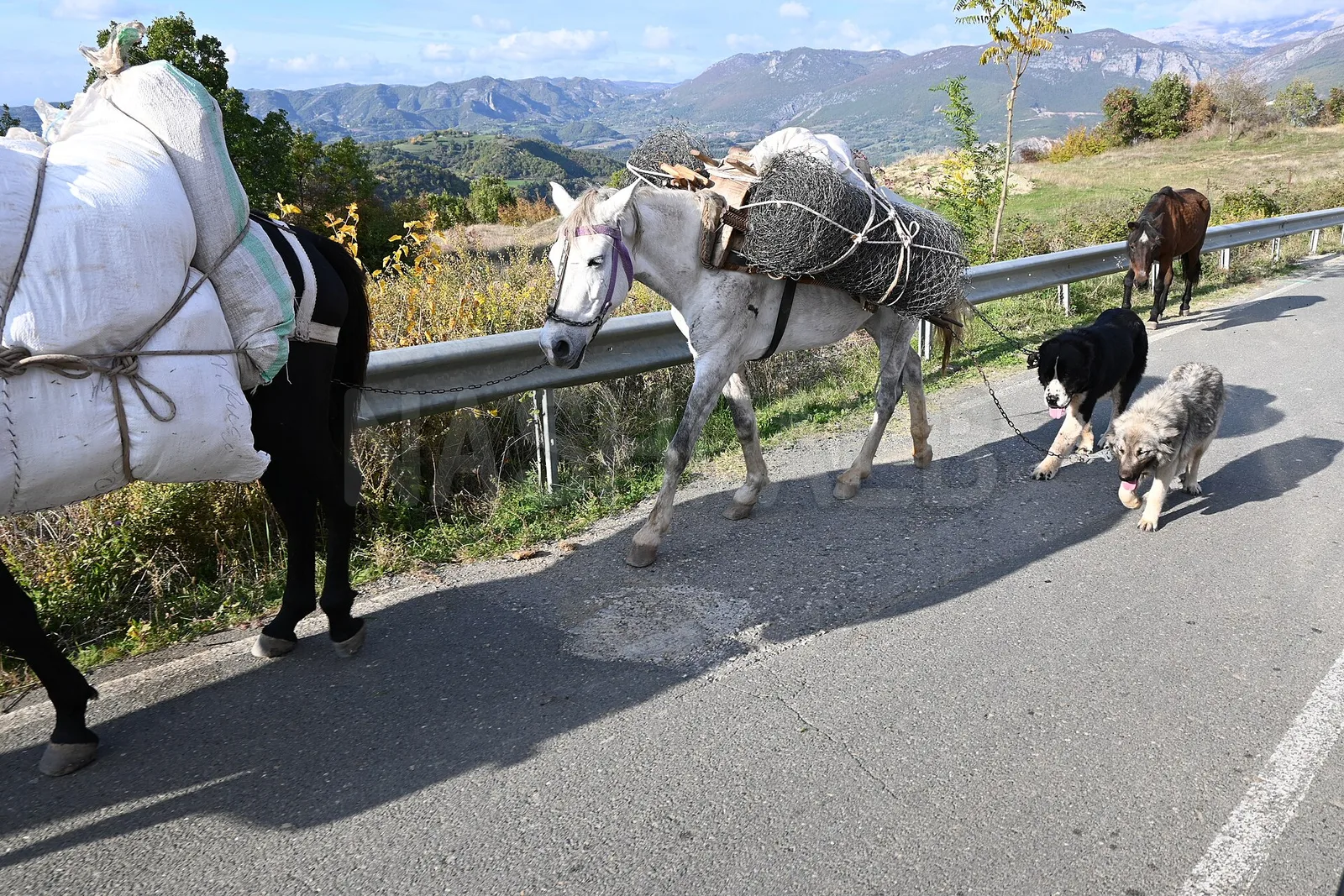
A dog or cat from Ukraine to Albania: four months of preparation, not a week
The commonest mistake is to think a vaccination and a certificate will do. From Ukraine they will not, and the reason is formal: Albania applies the European list of countries, and Ukraine is not on it. For animals from countries outside that list a rabies antibody test is compulsory, and it is that test which stretches the preparation into months. The order is strict and the steps cannot be swapped. The chip first. The microchip must be implanted before the rabies vaccination. A vaccination given before the chip does not count — the animal will have to be vaccinated again. Rabies vaccination. The animal must be at least 12 weeks old at the time. Wait at least 30 days after the vaccination — only then draw blood. The antibody test. The result must be at least 0.5 IU/ml. The blood must be taken no later than 3 months before the certificate is issued — so after the test there is more waiting. The veterinary certificate. Valid 10 days from issue to the border crossing. After entry it remains valid four months for movement inside the country. From chip to border, about four months in all. If the animal is already vaccinated but was vaccinated before being chipped, the count starts again. There is an exception for the very young: an unvaccinated animal under 3 months may enter if it has a passport and has been kept since birth in its country of origin without contact with wild animals, or if it travels with its mother. How many animals. Up to five per person. More is allowed only for animals over 6 months old and only for a competition or show, with documentary proof of registration. More than five without that is commercial import, under different rules. If someone other than the owner carries the animal, it is allowed within five days before or after the owner's own journey, and a written declaration naming the accompanying person is required. No official source requires an import permit obtained in advance — neither customs nor the veterinary service mentions one. Once here. The Albanian veterinary service law requires all dogs to be identified and entered in a register, and the acquisition of a dog to be notified to the veterinary service within 14 days. The cost of the passport and of identification falls on the owner. What we could not confirm: whether Albania has banned breeds or national muzzle rules. We found no national provision, and municipalities sometimes have their own. Check with your local municipality.
Read →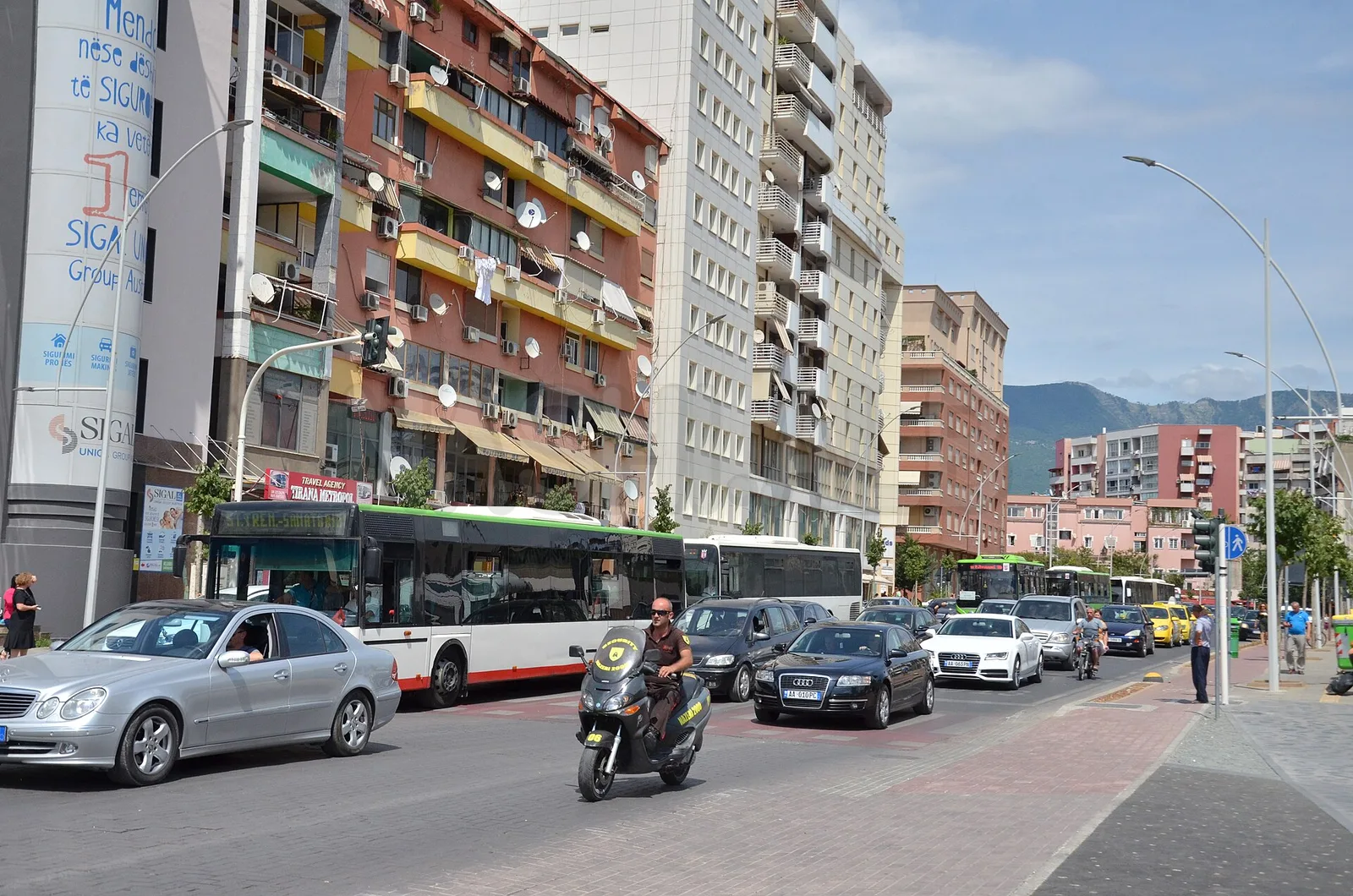
Foreign plates and foreign licences: a year after your permit, everything changes
Two deadlines worth knowing before they pass. Neither runs from your arrival; both run from your becoming resident here. The licence. The Road Code allows driving on a foreign licence on one condition: that you have not been resident in Albania for more than a year. After a year from the day you received your residence permit, driving on even a valid foreign licence is punished exactly as driving on an invalid Albanian one. An international permit does not save you, and the road authority says so on its own site: it is not valid for circulation in Albania if the holder has been resident here for more than a year. An international permit ceases to be valid in any country where its holder settles. Exchange without an exam is open to holders of licences from the EU, the USA, Canada, and countries with which Albania has a reciprocity agreement. The road authority lists fourteen such countries — Ukraine is not among them. For a Ukrainian, then, there is one road: a driving school, the theory exam and the practical exam. Worth starting well in advance, not a month before the year runs out. A car on foreign plates. Here there are two different deadlines from two different laws, and that is not a mistake. The customs regime of temporary admission gives 6 months, and a trip to a neighbouring country does not reset it — customs says so plainly. The Road Code separately provides that a foreign-registered car may circulate in Albania for a maximum of one year, and the penalty for breaching that is confiscation of the vehicle. The temporary admission regime itself rests on the owner and user being established outside the country. When you obtain a residence permit, that condition stops being met. We found no published rule anywhere saying "after your permit you have N days to clear customs" in any primary source. So do not rely on forum advice: ask customs. If you do clear it: duty on a private car consists of VAT only. For overrunning, customs counts 50% of the unpaid charges if you come forward yourself, and 75% if you are stopped. For breaching the six-month period plus use by unauthorised persons: 50,000 to 200,000 lekë. There is also a relief for those transferring their normal residence to Albania: personal belongings, a private car included, are exempt from duty. But the conditions are strict and cumulative: you must have owned the car and had it registered in your name for at least 12 months before the move, have used it abroad for at least 12 months, must not sell or transfer it for two years after clearance, and must lodge a guarantee. Goods can be brought in under the relief within 12 months of your settling here.
Read →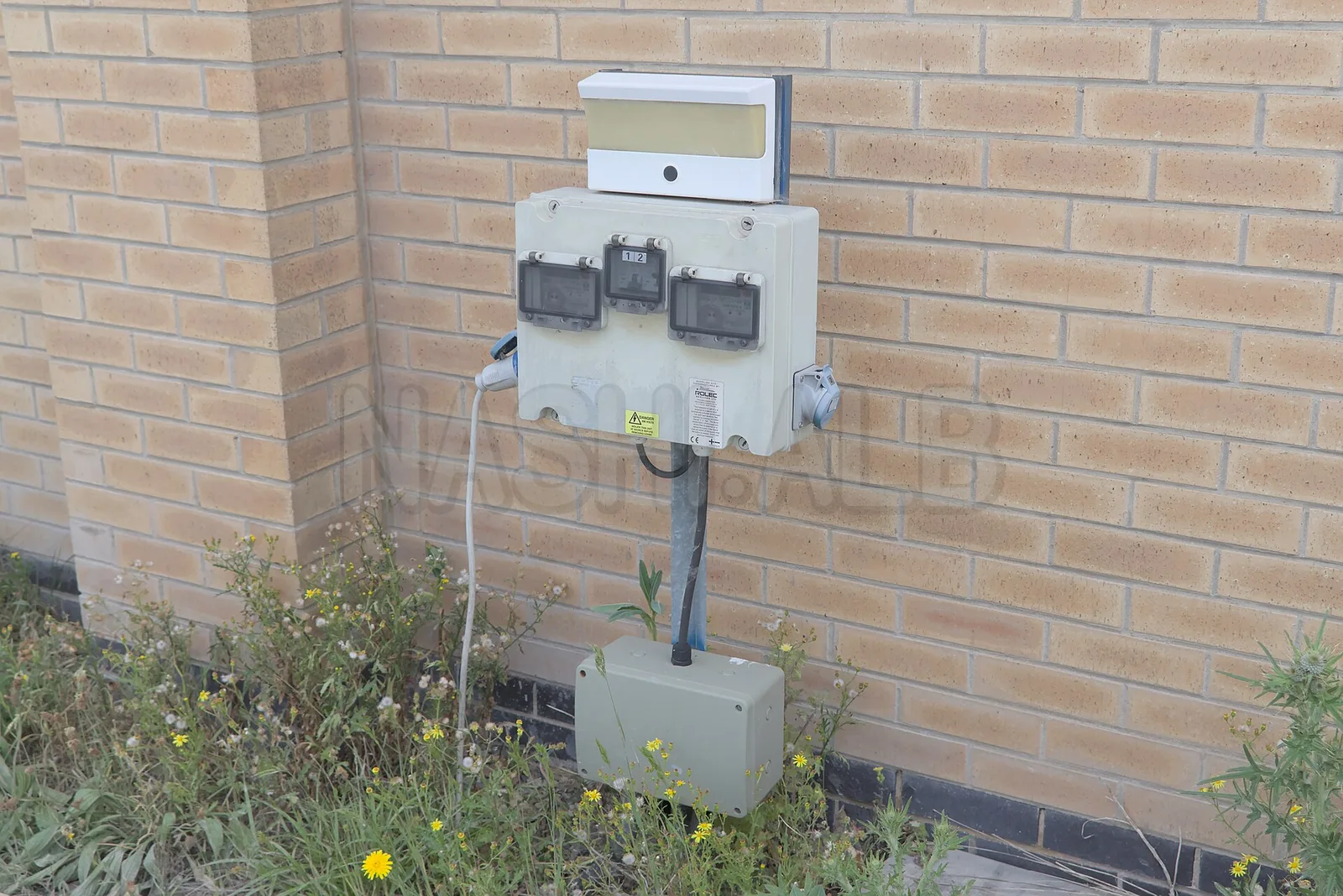
Electricity in Albania: the 700 kWh threshold and why it works as a cliff
The household electricity tariff in Albania has two prices: 8.5 lekë per kWh and 9.5 lekë. The line between them is 700 kWh a month. The prices are quoted without VAT; the standard rate is 20%. The important part is not the figures but how the crossing works. It is not a step, it is a cliff. The note to the official table says it plainly: anyone consuming 701 kWh or more pays 9.5 lekë for the whole month's consumption, not only for the excess. Work out what that means. 700 kWh costs 5,950 lekë. 701 kWh costs 6,659.5 lekë. One extra kilowatt-hour costs about 710 lekë. This is why a winter bill sometimes doubles for no visible reason: a heater left on for an extra week dragged you over the line. If your consumption sits around 650–700, watching the meter at the end of the month is not penny-pinching, it is hundreds of lekë. The tariff was approved by the regulator and runs until 31 December 2026. No decision for 2027 has been taken as of today; in each of the last two cycles it came in mid-December. Water and waste in Tirana. The household tariff is 65 lekë per cubic metre of water plus 11 lekë for sewerage, and a fixed charge of 200 lekë a month. Cleaning is 417 lekë a month, billed on the water bill. So about 617 lekë accrues before you have turned on a tap. Now the part that matters most if you rent. The electricity contract can be in your own name — a rental agreement is on the list of documents the supplier accepts. Changing the name on the contract costs 300 lekë. And here is the thing that lands people in someone else's debt: the supplier contracts only with a person who is not a debtor to it, and the debt sits on the connection point, not on the person. Before signing a lease, ask for the latest bill and make sure nothing is outstanding on the meter. Otherwise untangling a stranger's arrears becomes your problem. The standard contract requires no deposit for electricity. If a landlord asks for one, that is their private condition, not the supplier's rule. A new contract on already-connected premises must be concluded within 7 days of a complete application.
Read →
Before 30 March 2027: what to do so you do not lose your legal stay
Ukrainians may live in Albania without a residence permit until 30 March 2027. That is a government decision of 10 April 2026; it covers people already in the country, and it rests on article 29 of the Law on Foreigners. Before it there was the 2022 regime, extended twice — in 2024 from two years to three, and in 2025 from three to four. We do not know whether it will be extended again, and we will not guess. But there is a difference between waiting for a decision and doing nothing: a permit can be applied for in advance, and then the date in the calendar stops being about you. The application is made online through e-Albania — the service is called "Request for a residence permit". The type depends on your grounds: family reunification with an Albanian citizen, reunification with a foreigner who already holds a permit, study, the unique permit (which combines residence and work), other reasons, permanent. Now the part that gets applications rejected. The procedure is tight in days, and none of the deadlines has slack in it. When the application is accepted, an invoice for the state fee arrives by e-mail. It must be paid within 24 hours at any second-tier bank. Within 7 days the originals must be sent by post, together with two photographs, the payment mandate and the printed, signed form. Miss either of those two deadlines and the application is rejected at once, with no reminder. If the documents have gaps, the migration authority notifies you within 10 days and gives you up to 30 days to put them right. The decision, acceptance or refusal, is sent by e-mail within 30 days of submission. While it is being considered you are not left in limbo: once the complete package is submitted and paid for, a temporary permit with an electronic signature is issued, valid for up to two months. When the permit is approved you must appear in person at the local migration office for the biometric card. The permit runs for 3–6 months, one year, two, three, five, or permanent, depending on the grounds. On money. The state fee for a family-reunification permit and for a study permit is 4,500 lekë the first time and 2,250 lekë on renewal. For children under 16 the service itself is free and only the biometric document is paid for. Other permit types have their own tariff — e-Albania says plainly that the cost depends on which permit you are applying for. Two things worth starting early, because they take the longest. First: documents from your country of origin are accepted translated and legalised, which is a separate procedure and separate weeks. Second: give your real mailbox and watch it — all communication with the migration authority goes by e-mail, and a missed letter means a missed deadline. One place where the published description is silent. It says the online application is made within 30 days of entering the country, and that there is a fine for breaching that deadline. How that is counted for someone who has lived here for years under the visa-free regime and never needed a permit is not explained anywhere in the published text. Do not guess — ask at your local migration police office before you apply.
Read →
Health care in Albania: what you get without insurance, and what joining the system costs
Compulsory health insurance in Albania is tied not to citizenship but to two things: permanent residence and whether you are economically active. For a Ukrainian living here under the government's April decision — that is, without a residence permit — this means something concrete: you are outside the system. By law a foreigner's insurance number is the number of their residence permit, and the health card is issued only in person at a regional office of the Fund, on production of that permit. No permit, no card. What you are entitled to anyway. The law names three things the Fund pays for even for the uninsured: emergency care, family-doctor visits, and the preventive check-up package. A foreigner receives emergency care on equal terms with Albanian citizens — that is written into the health care law. "Emergency" means an acute condition with immediate risk to life or health; the entitlement runs until stabilisation or admission to hospital. How to get into the system. There are two roads. Through work. Anyone employed by, or trading through, an entity registered in Albania is insured automatically. The contribution is 3.4% of a base. For an employee it is split evenly with the employer and the base is the full salary, but not less than the minimum wage. For the self-employed the base is twice the minimum wage. Voluntarily, on a residence permit. The contract is signed at a regional office of the Fund. The contribution is counted the same way: 3.4% of twice the minimum wage. Since 1 January 2026 the minimum wage is 50,000 lekë, which makes the contribution 3,400 lekë a month. Work from the formula rather than from that figure: when the minimum wage moves, so does the contribution. The voluntary road carries a condition worth knowing before you fall ill: entitlement begins six months after registration and payment. If you register more than three months after a previous insurance period ended, it is a year. What the system covers. Consultations and treatment in public primary care centres and public hospitals, free, respecting the referral system. A home visit where the patient cannot come in. Private providers only where they hold a contract with the Fund. Medicines on the reimbursement list: the insured person either pays nothing or part of the price, but never more than half. What it does not cover: anything outside the approved packages, and the co-payments the government sets separately. On private insurance. The regulator publishes market totals, not prices: "accidents and health" produced around 1.2 billion lekë in premiums over the first nine months of 2026, with nearly half the market in one insurer's hands. Nobody publishes an average policy price, so it has to be asked of insurers directly. And one trap that is easy to walk into: what is sold as a "health card" for two and a half thousand lekë is sometimes not insurance at all but a discount card for a few clinics. They are different things, and the second one will not pay your hospital bill. Separately: there is no social security agreement between Albania and Ukraine, so Ukrainian contributions do not count here. And the help from UNHCR and its partners that we wrote about earlier is addressed to asylum seekers and refugees; it does not automatically extend to those living under the visa-free regime.
Read →
Albania provisionally closed a fourth chapter of its EU negotiations
On 13 October Albania and the EU provisionally closed negotiations on chapter 20 — enterprise and industrial policy. It is the fourth chapter closed. The three before it were closed in July 2026: science and research (25), education and culture (26), and external relations (30). As it stands, Albania has opened all 33 negotiating chapters and has provisionally closed four of them. The word provisionally is not a formality here. Under the negotiating principles, no agreement on a single chapter counts as final until an overall agreement has been reached on all chapters, and the EU may return to a closed chapter if it needs to. Why it is worth knowing for anyone living in Albania: accession gradually pulls local rules towards European ones — from standards in trade and industry to migration procedures. This is a movement measured in years rather than a change you will feel next month, but it sets the direction.
Read →
The state will compensate businesses for damage from the October protests
Alongside the new rules on gatherings, the government adopted normative act no. 6/2026 — on compensating the damage businesses suffered during the protests of 13–22 October. The scheme runs like this: the state pays compensation to the damaged business and then recovers that money from whoever is found responsible. The liability is joint and extends to the organisers of a protest, whether or not they called for violence. One limit worth knowing straight away: the act covers only businesses with an annual turnover of up to 14 million lekë. Anything larger falls outside it. If your café, shop or workshop in central Tirana was damaged in those days, it is worth gathering evidence now: photographs of the damage, repair invoices, the police report if one was made. The application procedure is set by the government — follow the official channels and check the details with your accountant or a lawyer, because the conditions may yet be refined.
Read →
Fines for taking part in protests: the new rules are in force from 29 October
On 28 October the government adopted a package of two normative acts — no. 5/2026 and no. 6/2026 — together with Council of Ministers decision no. 815/2026. They came into force on 29 October on publication in the official gazette; they did not go through parliament. What changed for anyone who ends up near a protest: A police director, with the prefect's approval, may restrict a gathering for up to 72 hours within a perimeter around educational, health and state institutions, where the risk of violence or damage to property is judged real, serious and imminent. An officer may remove a person from a protected zone for up to 48 hours. The police may now identify the social media accounts, e-mail addresses and telephone numbers of people spreading calls to violence, without a court order. The fines rose roughly tenfold against the previous ones: taking part in a banned gathering, or failing to obey an order to disperse — 10,000 to 100,000 lekë; refusing to disperse, in certain cases — 20,000 to 200,000 lekë; up to 500,000 lekë for failing to obey an order to disperse with the face concealed; blocking a road — 5,000 lekë. This is not paper. Sixteen people were fined exactly that 5,000 lekë for blocking a road: in fourteen cases the fine was written on the spot, two more were identified from video. In the first days the police issued 83 fines in all. The register deserves its own note. It is an electronic database of those referred to prosecutors for violence during the protests. It gives the border police grounds to refuse a person exit from Albania, and provides for notifying the authorities of the destination country and private accommodation providers. For a foreigner that means the consequences do not end with a fine on the street. On 5 November student associations, together with four civic organisations, asked the Constitutional Court to review the acts as a priority and to suspend them until it rules. The court has not spoken yet, and the acts are in force. What it means in practice. The protests are in central Tirana, and you can find yourself beside one by accident, on the way home or on an errand. If you see a crowd and police, the simplest answer is to go around. A fine is written for presence at a banned gathering, not only for doing something. Carry your documents.
Read →
Tirana: 12 people detained after the 20 October protest
According to the State Police, 12 people, including two minors, were detained after the 20 October protest in Tirana. Proceedings were opened against 7 more people without detention. During the protests, police and the building of Commissariat No. 3 were attacked with stones, pyrotechnics and Molotov cocktails; 10 police officers were injured.
Read →
An e-Albania account: a foreigner needs a residence permit
Almost everything goes through the e-Albania portal: enrolling a child in school, applying for the single permit, having a school certificate recognised, health insurance. And there is one condition worth knowing in advance. Who may register The portal's help page names two categories of private individuals: Albanian citizens — using the personal identification number (NID) from their ID card or passport; foreign citizens holding a residence permit in Albania — using the identification number issued when the permit was granted. There is no third category. In other words, without a residence permit you cannot open a personal e-Albania account — the identification number the form requires simply does not exist. This matters for anyone staying in Albania under the government decision without obtaining a permit: that decision grants the right to remain, but not access to electronic services. The same permit number, it is worth recalling, also serves as the compulsory health insurance number. A business account is a separate case For business the rules are wider. A business may be registered by: Albanian citizens; foreigners with a residence permit; foreigners without a permit — but only in order to register a business as its owner or administrator. For the last group the registration page offers a separate option, "create a business account in a foreign system". It requires a NUIS — the unique identification number assigned to a legal entity after official registration. What the form asks for the personal identification number (NID); an email address — the activation link and all notifications about your applications go there; the expiry date of your identity document (day.month.year); a mobile number: Albanian in the format +355 6xxxxxxxx, foreign as 0044/0039/0032xxxxxxxx depending on the country; a password of at least 14 characters that neither begins nor ends with a space; personal details — given name, surname, patronymic, date of birth — which must match the civil registry; a captcha. The portal gives a separate warning: take care with data containing the letters ë and ç. Activation Two steps: enter the 6-digit code sent by SMS, and follow the activation link in the email. If something does not work: helpdesk@e-albania.al. Where to check Help with using the portal — e-Albania — the full text on registration Registration on the portal Application for the single permit (leje unike) Important: the details in your profile must match your documents exactly. A one-letter discrepancy — particularly in ë or ç — surfaces when you submit an application, not when you register, which is the latest possible moment to find out. This material is prepared for Ukrainians living in Albania. It is for information only and is not legal advice.
Read →
Moving to Albania from an EU country: what changes for a Ukrainian
The main thing to understand before you move: EU temporary protection does not apply in Albania. Albania is not an EU member; it has its own system, and its own rules on every front. Status: what stays behind in the EU The temporary protection you received in an EU country rests on an EU directive and has been extended by the Council of the EU until 4 March 2027. It is an EU status, and outside the EU it does not operate. Albania has its own, separate system: temporary protection under Law No. 10/2021 "On Asylum", granted by the Albanian Council of Ministers. These are different statuses, and one does not turn into the other automatically. Before you leave, ask the authority that granted your protection what happens to your status and your payments once you leave the country. That is decided by the EU state, not by Albania, and the answer differs from country to country. Staying: no residence permit needed Ukrainian citizens may enter Albania without a visa and stay without obtaining a residence permit until 30 March 2027, under a decision of the Albanian Council of Ministers. That is a right to remain, and it does not depend on where you came from. Work: stricter here than in the EU In an EU country, temporary protection opened the labour market almost immediately. Albania is different: to work you need the single permit (leje unike) under Law No. 79/2021 "On Aliens" — one card that is both a residence and a work authorisation. Applications go through e-Albania only, and take 4 to 12 weeks. For remote work for a foreign employer there is a separate ground: the permit for digital mobile workers. Driving licence: here you are luckier than most Albania converts licences issued by EU member states. If you have already exchanged your Ukrainian licence for one from an EU country, conversion is available. If you still hold a Ukrainian licence, it is not: Ukraine is not on the DPSHTRR list. One condition applies either way: an Albanian residence permit valid for more than one year. Healthcare: your EHIC will not work The European Health Insurance Card is not valid in Albania. The public system runs on compulsory insurance, and for a foreigner the insurance number is the number of their residence permit. Without a permit there is nothing to enter the scheme with. Emergency care (127) is given regardless of status. Tax: treaties with the EU, none with Ukraine This is the rare case where coming from the EU makes life simpler. Albania has double taxation treaties in force with 23 EU countries — among them Poland, Germany, Italy, Czechia, Romania, the Netherlands, Spain, France, Austria, Belgium, Sweden, Finland, Ireland, Greece, Hungary, Croatia, Bulgaria, Slovenia, Slovakia, Estonia, Latvia, Luxembourg and Malta. Also with Norway, Switzerland, Iceland and the United Kingdom. There is no such treaty with Ukraine. So if your income stays in an EU country, treaty rules apply; if it is in Ukraine, only the unilateral foreign tax credit under Albanian rules does. Documents: get the apostille before you move Albania recognises school documents only with an apostille or legalisation, notarised and translated into Albanian. An apostille on Ukrainian documents is affixed in Ukraine — by the Ministry of Justice, the Ministry of Education and Science, or the Ministry of Foreign Affairs, depending on the document. Arrange it before you leave: doing it from Albania is slow and expensive. Where to check The Council of the EU on extending temporary protection to 4 March 2027 Temporary protection — European Commission Albania's tax treaties in force Conversion of a foreign driving licence — DPSHTRR The single permit — e-Albania Important: your EU status is decided by the country that granted it. Before giving up your flat and buying tickets, write to the relevant authority and get the answer in writing. This material is prepared for Ukrainians living in Albania. It is for information only and is not legal advice.
Read →